
BBC: was it a coup?
This is a moment of extreme danger after years of relentless attacks from the Right

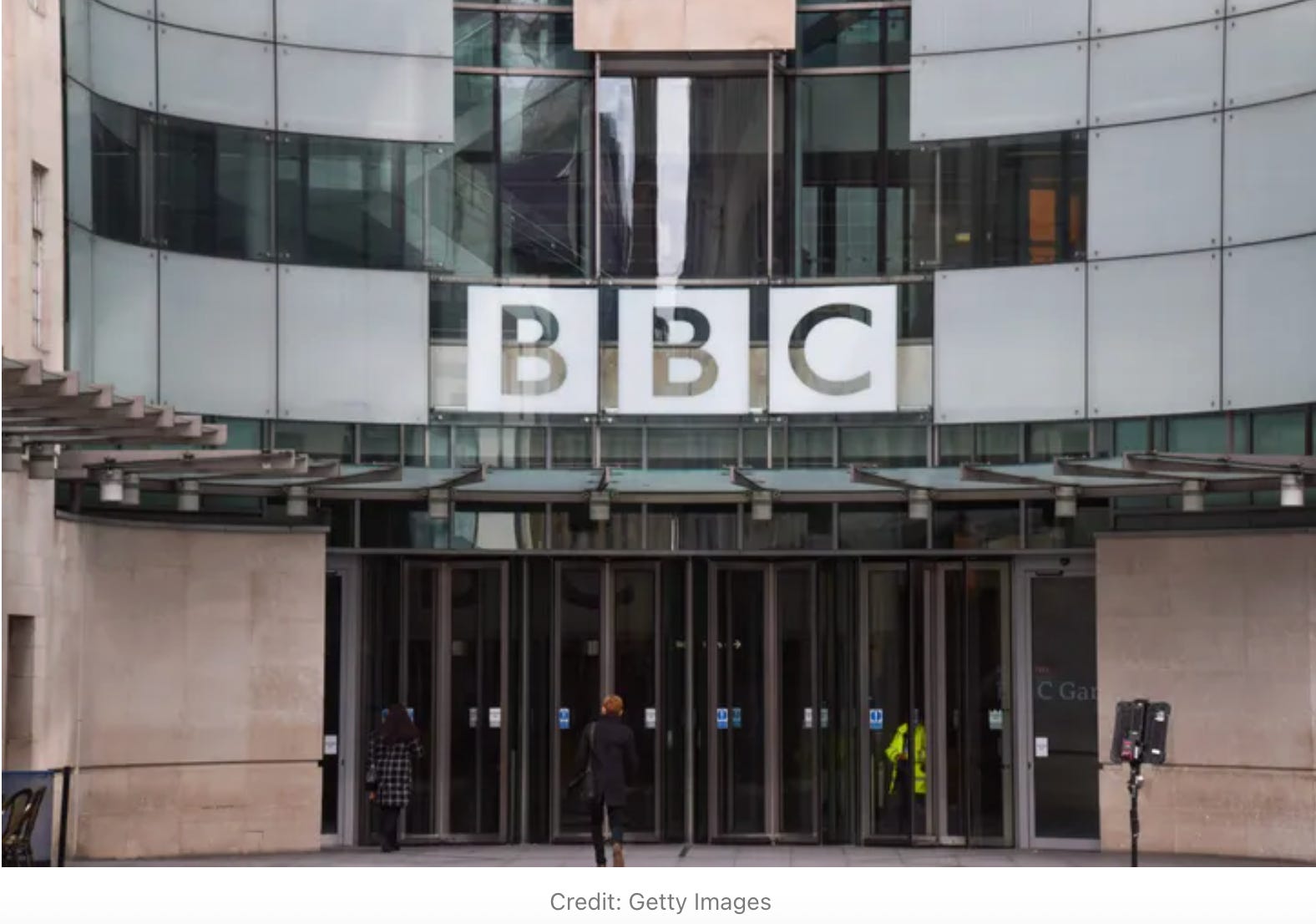
The BBC is in melt-down.
Again.
There is a wearying, depressing familiarity about this latest row. As always, it started with a stupid mistake, escalated when executives failed to recognise the problem, and then exploded when politicians, for reasons of their own, saw an opportunity to capitalise on the original error.
In my view, Deborah Turness, the head of BBC News, was right to resign, but Tim Davie, the director-general, should have stayed where he was. I also think the editor of Panorama, which broadcast the Trump documentary at the centre of the row, should have quit (or been fired), and that October Films, the independent company that made the programme, should be told it will not be awarded any further BBC commissions.
Let me spell it out. Whenever broadcasters edit material, which they do every day of their working lives, they have a simple, basic duty not to do so in a way that distorts what the speaker actually said. If I say ‘I don’t think the earth is flat’, you do not edit out the word ‘don’t’.
I made quite a few documentaries during my 20-plus years at the BBC (radio, not TV), and the rules couldn’t have been clearer: you do not internally edit a clip. October Films broke that rule, and now the DG has quit and the BBC has been seriously damaged.
Back in 2004, after the then government, led by Tony Blair (remember him?), took grave exception to a clumsily phrased report on the Today programme about Iraq’s supposed weapons arsenal, both the BBC’s chair, Gavyn Davies, and its director-general, Greg Dyke, fell on their swords following a brutally hostile inquiry report by a judge called Lord Hutton. (Both, by the way, were long-time Labour party supporters.)
The row led to the naming of a BBC source, the biological weapons expert David Kelly, who then took his own life. It was a terrible, tragic outcome to a stupid journalistic error — and it should have taught BBC bosses an important lesson.
But it didn’t, because none of its current top editorial figures were there at the time: Tim Davie didn’t join the BBC until the following year; Deborah Turness joined only in 2022, and her deputy, Jonathan Munro, joined in 2014.
David Jordan, the corporation’s long-serving director of editorial policy and standards, was already a senior BBC adviser at the time of the Hutton row — and I’m told that he was one of the few senior figures who immediately saw what was wrong with the Trump documentary.
It’s a great pity that his colleagues didn’t listen to him. When your journalism doesn’t stand up to scrutiny — and given the sheer quantity of the BBC’s news output and the relentless cutting back of staffing levels, there will be no shortage of such occasions — you should always own up quickly, apologise for mistakes made, and move on.
The BBC was wrong in 2004 to defend the reporting of the supposedly ‘sexed-up’ Iraq weapons dossier, and it was wrong last week to defend the editing of Trump’s speech before the storming of the US Capitol on January 6, 2021.
So is the BBC institutionally biased, as its critics allege? In my experience, it tries very hard not to be, but of course it doesn’t always succeed. Its News division is staffed overwhelmingly by young, university-educated, urbanites who mix mainly with each other, and yes, who do tend to share a common outlook on life.
The job of their bosses is to ensure that their legal obligation to observe ‘due impartiality’ is properly observed. In the words of the BBC’s editorial guidelines: ‘Impartiality will always rest on good judgement, rather than any mathematical formula; it contains many elements, such as ‘accuracy’, ‘fairness’, ‘objectivity’, ‘open-mindedness’ and it always takes account of context. It usually involves more than a simple matter of ‘balance’ between opposing viewpoints and does not prevent objective judgements being made, based on evidence.’
Did the way the Trump documentary was edited adhere to those guidelines? Was the way it reported Trump’s speech accurate, fair and objective? Plainly it was not, so how the members of the BBC’s grandly-named Editorial Guidelines and Standards Committee failed to see that is a mystery.
There is no excuse for the way Trump’s comments were edited. However, it is worth pointing out, as former Guardian editor Alan Rusbridger did last Friday in The Independent, that the Congressional committee that examined the events of 6 January recommended criminal charges on the basis that Trump did indeed incite the attack on Congress – a verdict backed by the only federal district judge to consider the case.
The dossier that brought down Davie and Turness was written by Michael Prescott, a one-time journalist turned PR man who was appointed three years ago as an ‘external adviser’ to the BBC, not long after then prime minister Boris Johnson had named him as an adviser to help in the recruitment process for a new head of the media regulator Ofcom.
Prescott identified a long list of alleged shortcomings in the BBC’s journalism, including what he said was pro-Hamas reporting on the BBC’s Arabic service, and a ‘pro-trans’ agenda in the reporting of gender identity issues. It was his fury at the way executives failed to respond to his concerns that led to the ‘leaking’ of his report (who on earth could have leaked it, I wonder?) to the Daily Telegraph.
He is reported to be close to Robbie Gibb, a former head of communications at 10 Downing Street under Theresa May who now sits on the BBC Board and who is said to be a powerful voice against what the corporation’s right-wing critics claim is its deep-seated ‘liberal bias’. For what it’s worth, I agree with the verdict of The Observer (declaration of interest: I worked at The Observer for more than a decade before I joined the BBC in 1989) that Davie and Turness have been victims of a coup led by the politically appointed members of the BBC Board.
This is a moment of extreme danger for the BBC. It has been under relentless attack from the right for several years (Johnson in particular seems to have regarded its very existence as a personal affront), as well as from commercial rivals including the Murdoch empire.
There are also plenty of critics on the Left who say it has been unduly sympathetic to Nigel Farage and his Reform party and too ready to bow to criticism of its Middle East coverage from pro-Israel lobby groups.
And yet. Ask British voters which news outlet they trust most, and the BBC still comes top. Ask Americans the same question, and the BBC comes second. (The Weather Channel comes top.)
Who brought us Celebrity Traitors, which became the most watched live TV show of the year? Who brings us Strictly Come Dancing? EastEnders? Every one of the top 10 TV shows last Christmas Day? Yep, good old Auntie. And all at a cost of £3.35 a week.
So now is the time to come to the aid of the BBC. It needs all the friends it can get (and that includes members of the current government, who might like to be a bit more voluble in their support).
Because I promise you this: you’ll miss it when it’s gone.
Thanks Robin - grateful for your thoughtful intervention. I once got into terrible trouble in an Economics lesson because I burst out laughing when the very scary economics teacher used the phrase ‘throw the baby out with the bath water’. I had never heard it before. Some 40 years on, while you and I both agree that the BBC is not perfect, I’m horrified that many people don’t see the value of what is being diminished and may well be lost in the near future. There are an awful lot of powerful individuals who would like to tip that baby out of the window. I’m not laughing.
Robin, your wise words are a welcome intervention. The BBC is been torn apart by the same polarising forces that produced Brexit, Reform UK, Tommy Robinson and Corbyn.
Calmer heads must prevail.